
Durham Tech student selected as part of inaugural Student Experience Council
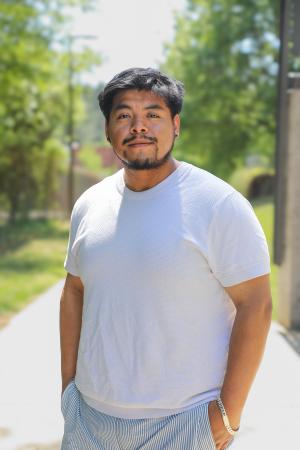
Durham Tech student Kevin Hernandez will serve on the inaugural Student Experience Council of the Thomas F. Looney Endowment for Student Experience & Innovation.
The Student Experience Council was created as part of the new endowment established through a $100,000 gift from North Carolina Community College System State Board Chairman Thomas F. Looney and his wife, Lucy. The North Carolina Community Colleges Foundation plans to grow the fund to a $1 million endowment, supporting technology-driven projects and innovations designed to improve the student experience across the state’s community colleges.
Hernandez’s selection puts him in the room where the future of the community college experience is being talked about. Students on the council are asked to be candid as they help shape what comes next for education at North Carolina’s 58 community colleges.
“My first attempt at post-secondary education was Durham Tech,” Hernandez said. “But not knowing what resources the College offered and how those resources could or would benefit me, along with some challenges I faced at the time, set back my academic journey. Finding my footing outside of the classroom gave me the confidence and ingredients I needed to narrow down what field I would pursue and how I would commit to coming back to finish my degree with Durham Tech. “
Hernandez is on track to graduate in fall 2027 with his associate in mechanical engineering.
“I have learned a lot about myself and I have done a lot of intentional, committed work,” Hernandez said. “I had to ask what resources I needed and then search out those resources. I’d like that search to be easier for students to come. Durham Tech has a lot of the right people in the right places, but there are so many places. That’s where the Student Experience Council can help through innovation; new ideas to make college more user-friendly.”
The council is bringing the student voice directly into the technology roadmap and into broader decisions about data, innovation and student services.
“Being a first-generation college student, I have used quite a few resources I found along the way here at Durham Tech,” Hernandez said. “I’d like to share what I have learned and help others access those resources more easily and sooner, along with removing the stigma attached to asking for help.”
The Looneys see students not just as users of the system, but as valued customers who deserve an accessible, connected, responsive, trustworthy experience. The idea behind the council is straightforward: Ask students what they need and then listen. The word “innovation” can sometimes sound like it belongs exclusively in a technology lab. But for students, innovation can be much more practical.
“The people who are actually experiencing these systems every day are the students,” Hernandez said. “We want the right information at the right time. We want to know where to go for help. And we want technological options that make college navigation easier instead of more complicated. Having students involved in the conversation makes sense.”
Council members will conduct research and develop recommendations for the North Carolina Community College System Office and State Board. Their work will help inform priorities involving technology, data and student engagement — including personalized communication, customer relationship management systems, seamless learning platforms, unified data systems and other initiatives intended to make it easier for students to navigate college.
That mission hits home with Hernandez.Sometimes students know exactly what the problem is because we're the ones dealing with it,” he said. “We may have ideas about how to fix something that somebody who isn't going through that experience might not think about.”
That student-centered philosophy is central to Looney’s vision for the endowment. Looney has described the investment as an effort to transform the student journey from the first point of contact through career placement, with the student voice at the center of decision-making.
For Hernandez, that philosophy is especially meaningful because he is not just being asked what he thinks after decisions have been made. He is being asked to help shape the questions.
“To me, that's what makes this exciting,” he said. “We're not just being told what is going to happen. We're being asked what we think should happen. If we can make things better for students who come after us, that's something I'm proud to be a part of.”